
Can You Really Call Berberine “Nature’s Ozempic”?
Berberine is widely promoted for weight loss and sometimes called “Nature’s Ozempic.” But does berberine for weight loss actually deliver meaningful results? If you are thinking of buying it to lose weight or selling a product around that promise, there is one question that matters: what can people realistically expect it to do?
← Back to InsightsPossibly, but probably not by much. Some clinical trials show small reductions in weight while others show little or no meaningful difference. Across 23 randomized trials, the newest analysis found an average reduction of about 0.88 kg (1.9 lb).
That means berberine should not be described as a product that simply “doesn't work.” There is evidence of a small weight effect in some people.
But if your main reason for buying berberine is substantial weight loss, current evidence does not give you a strong reason to expect it. It also does not demonstrate the kind of weight-loss effect implied by the name “Nature’s Ozempic.”
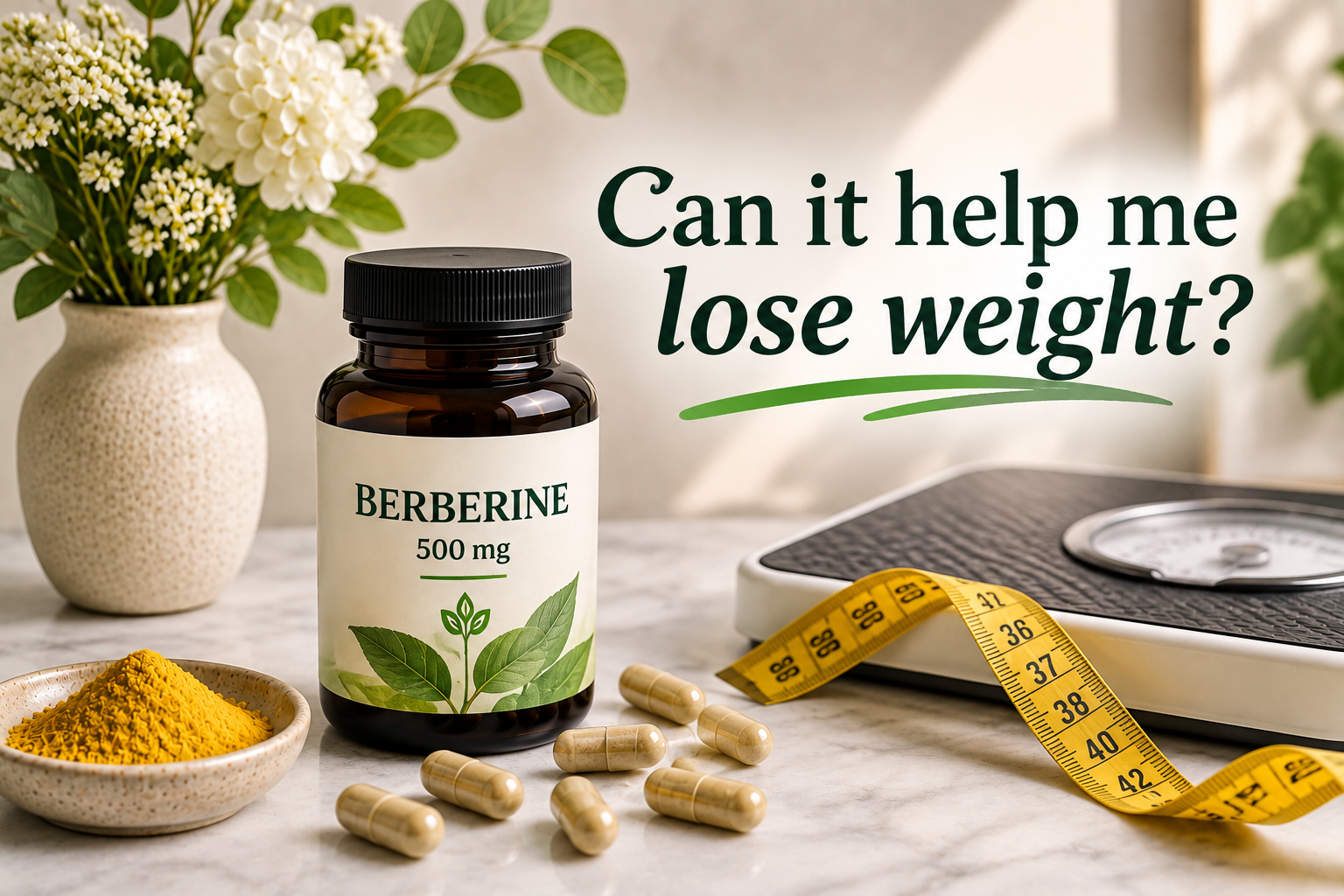
Do not buy berberine expecting large or predictable weight loss. Research suggests some people may lose a small amount, but the effect has not been large or consistent across studies.
What Does the Evidence Say About Berberine for Weight Loss?
| Your question | What the evidence says |
|---|---|
| Can berberine help me lose weight? | Possibly a little. Some trials show small reductions; others do not. |
| How much? | The newest analysis of 23 randomized trials found an average reduction of about 0.88 kg (1.9 lb). |
| Is it a strong weight-loss option? | Current evidence does not show a large or reliable weight-loss effect. |
| Does it work like Ozempic? | No clinical evidence demonstrates an Ozempic-like weight-loss effect. |
| Does berberine have other evidence? | Yes. Evidence is more encouraging for some blood-sugar and cholesterol outcomes, particularly in people with existing metabolic problems. |
Who appears more likely to benefit from berberine?
This is where the story becomes more useful. Some of berberine's stronger evidence is not really about weight loss.
More encouraging results have been reported in people who already have problems such as type 2 diabetes, poor blood-sugar control, metabolic syndrome or unhealthy cholesterol levels.
If an ingredient improves blood sugar in people who already have high blood sugar, that does not automatically mean a healthy person taking it mainly to lose weight will experience the same benefit.
A large 2026 study illustrates the point. Researchers studied 337 adults with obesity and fatty liver disease who did not have diabetes. After six months, berberine did not significantly improve the study's main measures of visceral abdominal fat or liver fat compared with placebo.
So the useful question is not simply, “Does berberine work?” It is: “What does it help with, and does that match the reason I am taking it?”
Then why is it called “Nature’s Ozempic”?
Part of the excitement comes from research suggesting that berberine may interact with some of the biological processes connected with GLP-1.
But sharing part of a biological pathway does not mean two products produce the same result in people.
In the landmark STEP 1 study, nearly 2,000 adults with overweight or obesity received semaglutide or placebo alongside lifestyle intervention. Those receiving semaglutide lost an average of about 15% of their starting body weight over 68 weeks.
The berberine and semaglutide studies were not head-to-head trials, and their results should not be treated as a direct mathematical comparison. But the overall clinical evidence makes the practical point clear: berberine has not demonstrated anything resembling that magnitude of weight loss.
The 2025 obesity meta-analysis included 23 randomized controlled trials and reported a pooled body-weight reduction of approximately 0.88 kg, with modest reductions in BMI and waist circumference and methodological limitations across the underlying literature. The 2026 multicenter, double-blind, placebo-controlled BRAVO trial randomized 337 adults with obesity and MASLD without diabetes and found no significant improvement in its primary visceral adipose tissue or liver-fat outcomes after six months. Preclinical evidence suggests that berberine metabolites may influence endogenous GLP-1 secretion, but mechanistic plausibility does not establish clinical equivalence to GLP-1 receptor agonists.
If substantial weight loss is the main reason you are considering berberine, the evidence does not show a large or dependable effect. You may lose a small amount, but you should not buy it expecting Ozempic-like results.
Berberine may be more relevant for some people with existing blood-sugar or cholesterol problems. That is a different reason for using the product and should be discussed with a qualified healthcare professional, particularly if you take medication.
Berberine has science behind it. The commercial risk comes from turning that science into a promise that is much bigger than the evidence.
Evidence of small weight changes or an effect on a GLP-1-related pathway is not the same as evidence for substantial weight loss. Building formulation, packaging or marketing decisions around that leap can mean spending money on a position that later needs to be changed or defended.
The better question before launch is not “Can we find a study for this claim?” but “Does the total evidence actually support what customers will understand this claim to mean?”
So, is berberine worth buying for weight loss?
If you are buying it primarily because you expect substantial weight loss, current evidence does not make a strong case for that purchase.
Berberine may produce a small weight change in some people and may have more useful effects on certain blood-sugar and cholesterol measures. But that is very different from being a powerful or predictable weight-loss product.
Berberine does not need to be “Nature’s Ozempic” to have scientific value. It simply needs to be judged by what the evidence actually shows rather than what an appealing nickname suggests.
The important question is rarely whether a product has “science behind it.” It is whether that science supports the specific benefit someone is selling or paying for.
This article is for educational purposes and is not medical advice. People considering berberine, particularly those taking prescription medication, should discuss its use with a qualified healthcare professional.
- Lei L, et al. Berberine and adiposity in diabetes-free individuals with obesity and MASLD: a randomized clinical trial. JAMA Network Open. 2026;9(1):e2554152. View study
- Elahi Vahed I, et al. The effect of berberine on obesity indices: a systematic review and meta-analysis. International Journal of Obesity. 2025. View study
- Asbaghi O, et al. Effects of berberine supplementation on obesity indices: a systematic review and meta-analysis of randomized controlled trials. Clinical Nutrition ESPEN. 2020. View study
- Xie W, et al. Glucose-lowering effect of berberine on type 2 diabetes: a systematic review and meta-analysis. Frontiers in Pharmacology. 2022;13:1015045. View study
- Zamani M, et al. The effects of berberine supplementation on cardiovascular risk factors in adults: a systematic review and dose-response meta-analysis. Frontiers in Nutrition. 2022;9:1013055. View study
- Yang WL, et al. Berberine metabolites stimulate GLP-1 secretion by alleviating oxidative stress and mitochondrial dysfunction. American Journal of Chinese Medicine. 2024;52(1):253–274. View study
- Wilding JPH, et al. Once-weekly semaglutide in adults with overweight or obesity. New England Journal of Medicine. 2021;384:989–1002. View study
Have a Product or Claim You Need to Get Right?
Before you invest further, launch, or make a claim, find out what the evidence actually supports, where the gaps or risks are, and what you may need to change.
Find Out What Your Evidence Supports